
Movement & Longevity
Can grip strength exercises help you live longer?
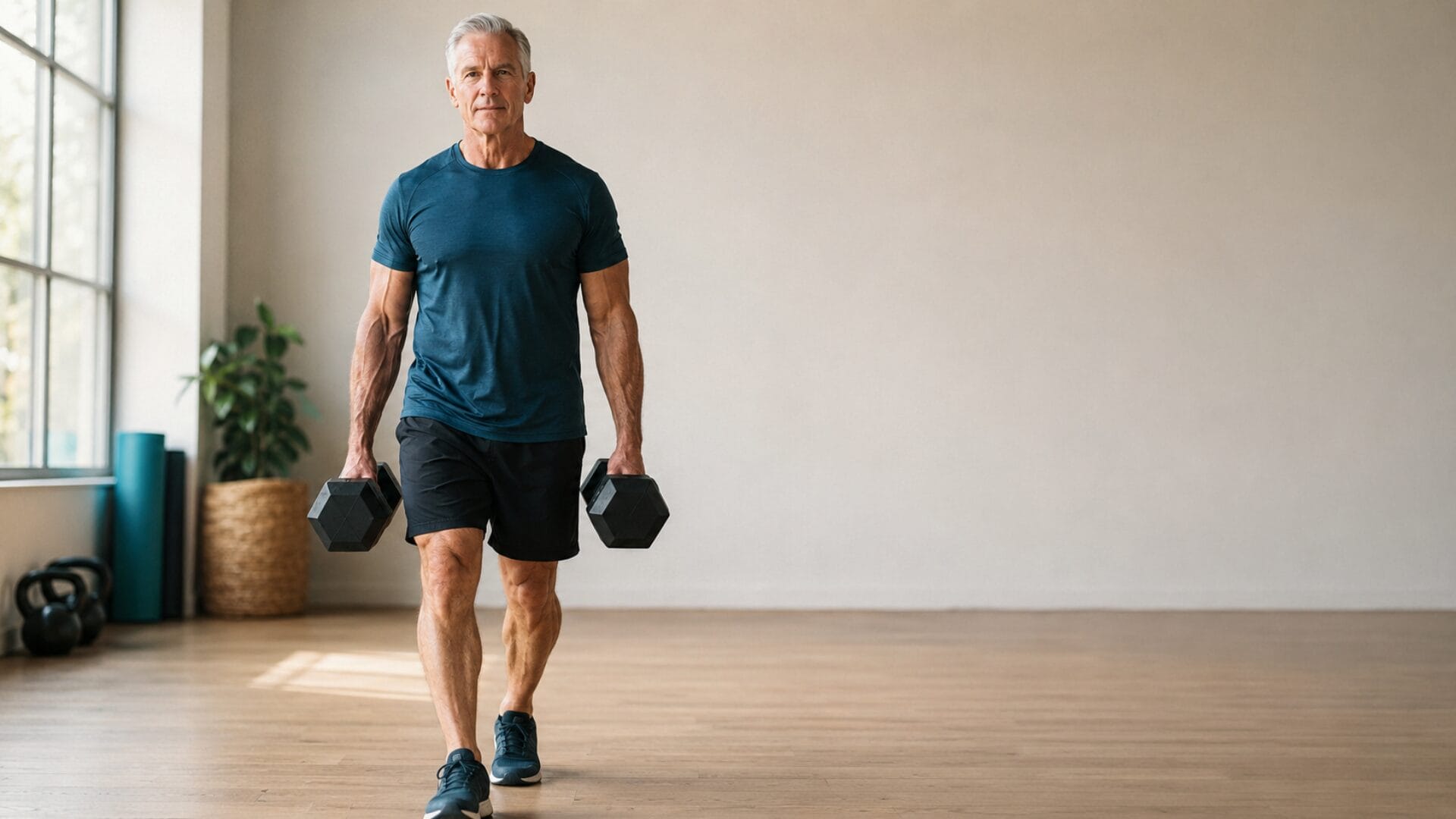
Stronger grip is linked with longer life, but not because your hands are magic. Grip strength tells us something bigger about muscle, coordination, ageing, and the body’s capacity to keep functioning.
- Updated - July 3, 2026
The short answer
Grip strength is one of the most consistent physical markers linked with mortality risk. That association is well established across decades of research.
The prediction comes from what grip strength reveals about the rest of the body. A strong hand is a signal of a strong, well-functioning system. Squeezing a gripper for ten minutes a day will not add years to your life. Building a body capable of producing that grip is a different proposition, and that is where the longevity benefit sits.
The useful question is not whether to train your grip. It is what your grip tells you about everything else, and what you do about that.
What the research actually shows
The link between grip strength and mortality is one of the most consistent findings in this area of health science.
3m
adults across 42 studies, where stronger grip tracked with longer life
META-ANALYSIS, 2017
16%
higher risk of death from any cause for every 5kg drop in grip strength
PURE STUDY, 17 COUNTRIES
27%
better odds of living longer, at around an hour of strength training a week
Meta-analysis, Am J Prev Med
The PURE study tracked 139,691 adults aged 35 to 70 across 17 countries over a median of four years. For every 5kg drop in grip strength, the risk of death from any cause rose 16%, and the risk of cardiovascular death rose 17%.
The Tromsø Study then followed 6,850 adults aged 50 to 80 for 17 years and found the same pattern held across age groups and across both men and women. Short and long follow-up agree, which is part of why researchers describe grip strength as a biomarker of ageing.
The measurement takes under a minute with a hand dynamometer, yet it carries more predictive weight than many far more complex tests. That combination of simplicity and reliability is why longevity-focused clinicians increasingly include it in routine assessment.
Discover a practitioner near you.
Looking for a practitioner near you? Our extensive network of qualified professionals is here to help you.
Why a hand grip predicts so much

Grip strength is not really about the hands. It works as a proxy for the condition of the whole system. A high grip strength usually reflects:
- Overall muscle mass and strength, particularly through the upper body and posterior chain
- Neuromuscular function, meaning how well the nervous system recruits and coordinates muscle
- A history of physical activity, since strength is built and held through use
- Metabolic and cardiovascular robustness, which track closely with muscle health
When grip strength falls, it often flags broader decline before other symptoms appear. Sarcopenia, the age-related loss of muscle, typically begins around age 50 and accelerates after 60. A weakening grip is one of the earliest visible signs of that process underway.
A weak grip does not cause death, but it tends to travel with the conditions that do.
The trap most coverage falls into
This is where a lot of online advice goes wrong. Because grip strength predicts longevity, it is tempting to assume that improving grip strength directly extends life. Wellness content often makes exactly that leap, recommending hand grippers and stress balls as a longevity tool.
The research does not support that interpretation. A review in Clinical Interventions in Aging concluded that grip strength predicts longevity because it measures things like total body strength, bone density, and nutritional quality. Isolated grip training carries none of the same signal. A person can build a crushing grip and still have a frail, deconditioned body, and the longevity benefit would not follow.
Grip strength is a marker of how well the whole body is ageing. Changing the number in isolation changes very little.
What actually moves the needle

If the goal is a longer, more capable life, the target is whole-body strength and function. Grip strength improves as a by-product of training the system well. The most effective approach uses compound movements that load the hands while demanding work from the major muscle groups.
Deadlifts
Load the grip heavily while building the posterior chain that supports posture and power.
Farmer's carries
Train grip endurance directly while challenging the trunk, hips, and shoulders under load.
Rows and pull-ups
Build pulling strength through the back and arms, with the grip working throughout.
Loaded carries and hangs
Develop sustained grip and shoulder stability together.
How to read your own grip
You do not need a lab to pay attention to this.
- Notice change over time. A grip that weakens year on year is worth taking seriously, more so than a single low reading.
- Watch the everyday signals. Jars that used to open easily, bags that feel heavier, a handshake that has lost something. These reflect the same decline the dynamometer measures.
- Get a baseline if you can. Many clinics and gyms have a dynamometer. A number now gives you something to compare against later.
A declining grip works as an early prompt to train, before the broader loss it points to becomes harder to reverse.
The bigger picture
Grip strength is an accessible entry point to a larger truth about ageing well. It is easy to measure, easy to understand, and it points directly at the thing that matters: whole-body strength, movement, and function maintained across a lifetime.
That is the lens worth carrying. What counts is the capacity of your whole structure to keep doing what you ask of it. Train for that, and a stronger grip follows.
Resources
Articles:
- Leong et al. (2015), PURE study, The Lancet. 139,691 adults across 17 countries; per 5kg lower grip, 16% higher all-cause and 17% higher cardiovascular mortality.
- Tromsø Study. Seventeen-year follow-up of 6,850 adults aged 50 to 80 on grip strength and mortality.
- Wu et al. (2017). Meta-analysis of 42 studies, around 3 million participants; 41% higher all-cause mortality for the lowest versus highest grip strength group.
- Review, Clinical Interventions in Aging, on grip strength as a proxy measure.
- Shailendra et al. (2022), American Journal of Preventive Medicine. Resistance training and mortality; peak benefit near 60 minutes per week.
PLEASE NOTE
PostureGeek.com does not provide medical advice. This information is for educational purposes only and is not intended to be a substitute for professional medical attention. The information provided should not replace the advice and expertise of an accredited health care provider. Any inquiry into your care and any potential impact on your health and wellbeing should be directed to your health care provider. All information is for educational purposes only and is not intended to be a substitute for professional medical care or treatment.
About the author
Find Expert Posture Practitioner Near You
Discover our Posture Focused Practitioner Directory, tailored to connect you with local experts committed to Improving Balance, Reducing Pain, and Enhancing Mobility.